
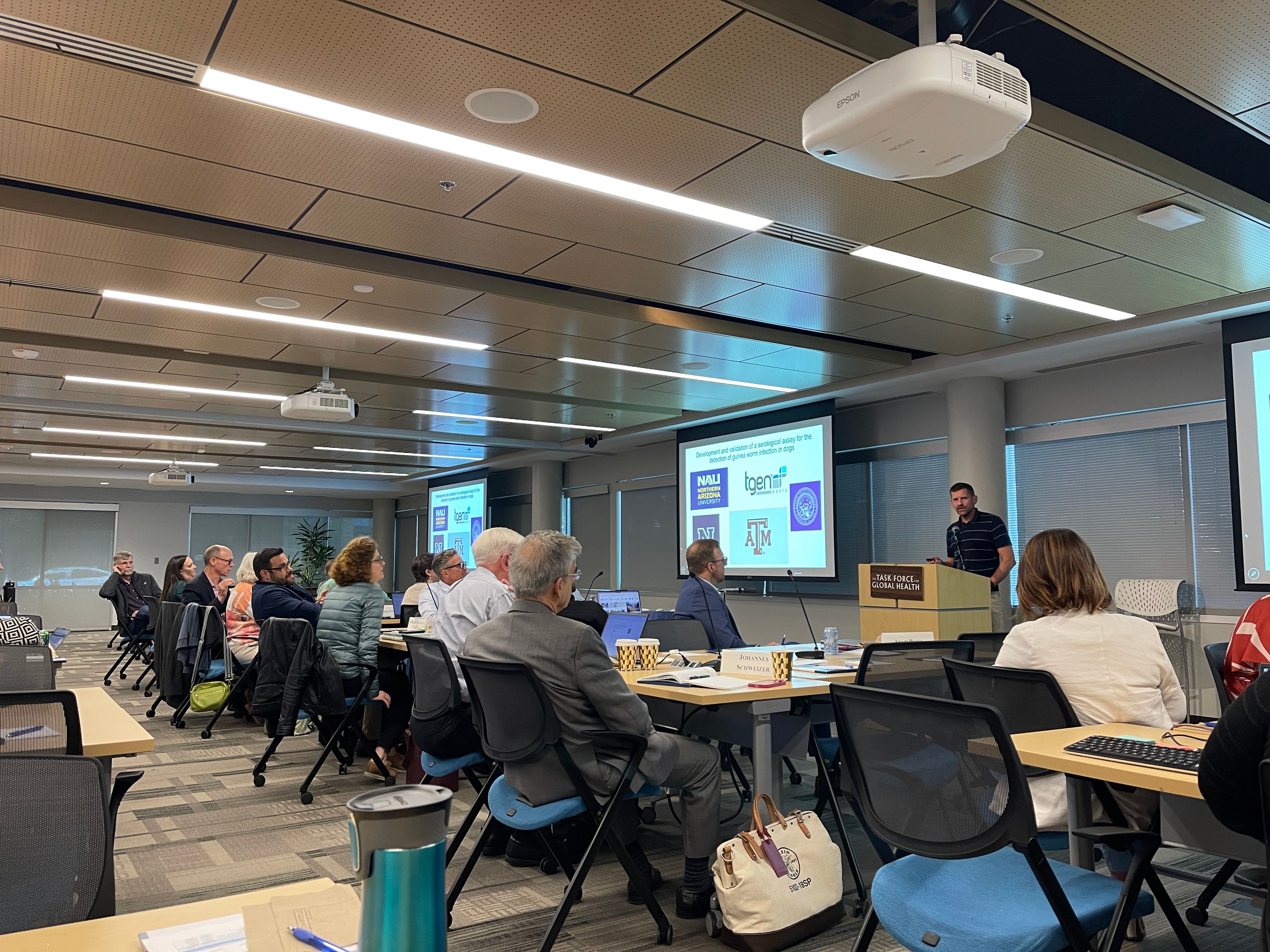
From April 29 to May 1, the Carter Center convened its annual Guinea Worm Eradication Program (GWEP) Research Review Meeting at the Task Force for Global Health in Atlanta. The meeting brought together collaborating universities, research institutions, and global partners to share progress, examine challenges, and chart next steps for the multidisciplinary research agenda underpinning Guinea worm eradication.
Over three days, participants exchanged emerging findings across the five GWEP research work streams: disease ecology, enhanced surveillance, population genomics, diagnostics, and therapeutics. Presentations and breakout discussions covered field deployment of new diagnostic platforms, genomic surveillance, copepod ecology, environmental surveillance, geospatial modeling, and progress in therapeutics development. Field perspectives from national programs in Chad, South Sudan, and Ethiopia anchored the conversation in the realities of work on the ground.
Guinea worm disease, once estimated to affect 3.5 million people annually across 20 countries in 1986, was reduced to only 10 human cases in 2025. It is on track to become the second human disease in history to be eradicated, after smallpox, with a 2030 certification target.
CEND was honored to be invited to participate. The invitation followed a recent engagement between CEND and the Carter Center, which included a Carter Center film screening hosted on the Berkeley campus and the March installment of our CEND It! lunch series featuring GWEP Director Adam Weiss. Representing CEND at the Atlanta meeting were Executive Director Kate Roberts, and CEND Faculty Affiliate Dan Fletcher, Chair of Bioengineering at UC Berkeley and a recognized leader in mobile diagnostic technologies for global health.
We are excited about the opportunities ahead to deepen collaboration with the Carter Center and the broader GWEP research community as the global campaign enters its final push toward zero!