
The global burden of infectious disease is characterized by two critical challenges: emerging diseases that pose immediate threats to public health preparedness, and neglected diseases that perpetuate health disparities in resource-limited settings. These diseases collectively affect billions of people and represent significant gaps in biomedical research and intervention development
The Diseases We Fight
Research Focus
Emerging Infectious Diseases
Addressing Novel Health Threats
Emerging infectious diseases are defined as infections that appear in human populations for the first time or existing diseases that are rapidly increasing in incidence or expanding their geographic distribution. Since the 1970s, approximately 40 infectious diseases have been identified, including SARS, MERS, Ebola, chikungunya, avian influenza, Zika, and COVID-19.
These pathogens present unique challenges due to limited population immunity and unpredictable health, social, and economic impacts. Factors including climate change, global travel, and urbanization create conditions that facilitate pathogen emergence and rapid international transmission.
Current priority threats include:
- H5N1 avian influenza, which demonstrated mammal-to-mammal transmission following spread to US dairy herds in March 2024
- Mpox clade I, which reemerged in 2024 with increased transmissibility and severity compared to previous outbreaks
- Hemorrhagic fevers like Ebola Virus Disease and Marburg Virus Disease
- Drug-resistant variants of established pathogens including tuberculosis and malaria
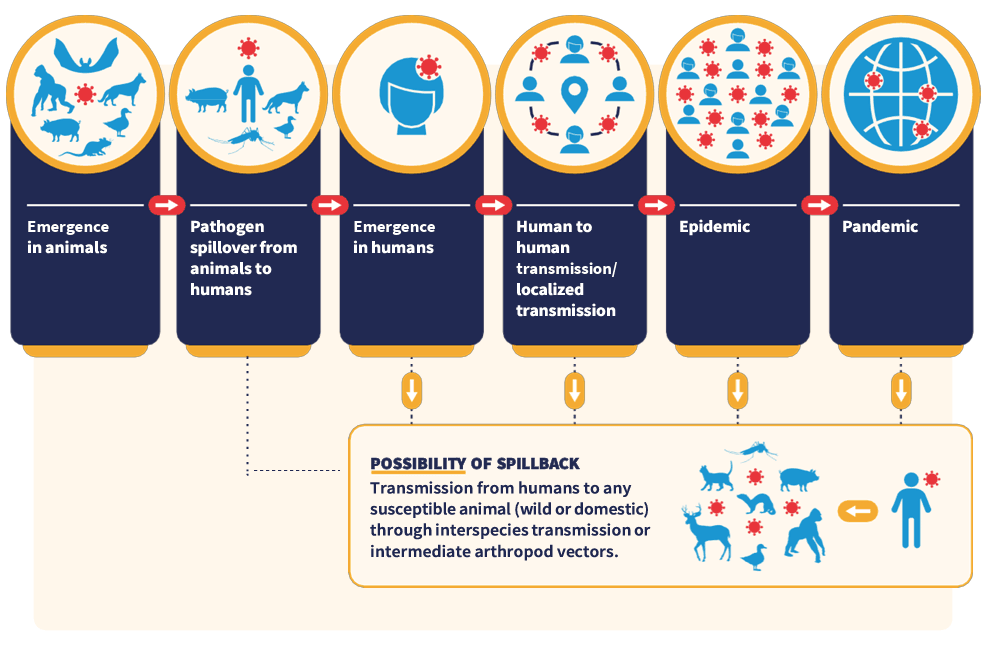
Below is a diagram of the stages of emergence, zoonotic spillover and potential spillback from the WHO global framework to define and guide studies into the origins of emerging and re-emerging pathogens with epidemic and pandemic potential.
Neglected Diseases
Addressing Health Inequities
Neglected diseases comprise a diverse group of conditions caused by various pathogens including viruses, bacteria, parasites, fungi, and toxins. These diseases affect more than 1 billion people globally, with 1.62 billion people requiring interventions against neglected diseases as of 2022.
While many neglected diseases have coexisted with human populations for millennia, they are characterized as "neglected" due to their disproportionate impact on low- and middle-income countries and historically limited research investment, despite imposing substantial economic and health burdens on affected populations.
Key characteristics include:
- Infectious: Caused by bacteria, fungi, or viruses
- Prevalence: Impact people in under-resourced settings, often with limited access to quality healthcare and sanitation
- Geography: Most prevalent in Africa, Asia, Caribbean, Latin America, and the Pacific
- Impact: Many cause long-term health conditions including blindness, disfigurement, disability, and developmental delays
- The World Health Organization has prioritized 20 Neglected Tropical Diseases
Learn more about neglected diseases here
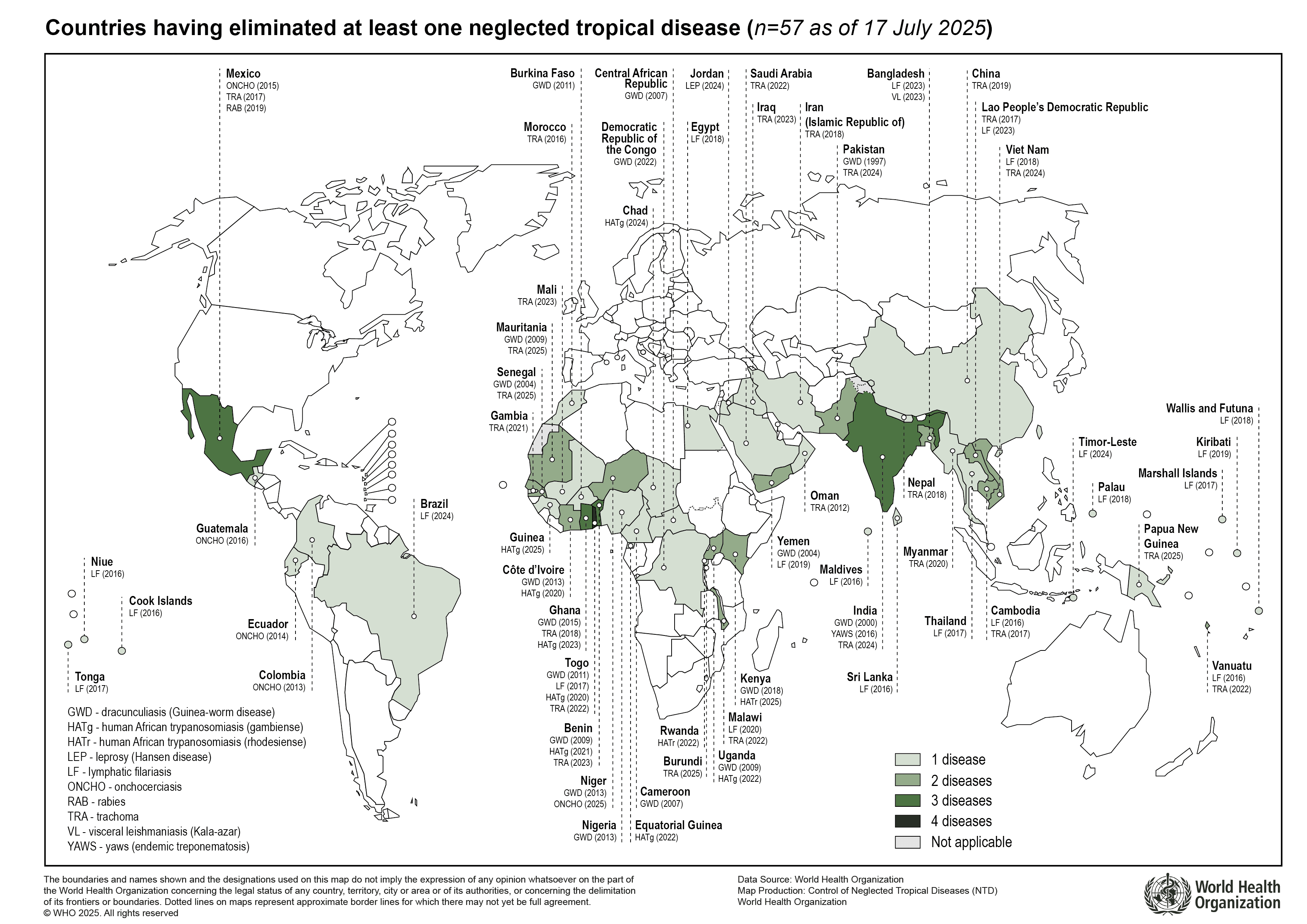
The global health community has made significant progress in address NTDs globally - 58 countries have now eliminated at least one NTD. Objectives and approaches for NTD control and elimination can be found in the WHO's Ending the neglect to attain the Sustainable Development Goals: A road map for neglected tropical diseases 2021–2030.
Below is a map of all the countries that have eliminated NTDs, published in the 2025 Global Report on Neglected Tropical Diseases which includes details about each focus disease and related accomplishments and gaps to address to continue progress toward elimination.
Research Approach
Both emerging and neglected diseases present shared challenges including limited research funding, complex transmission dynamics, and the need for interventions suitable for resource-constrained environments. CEND's multidisciplinary approach addresses these challenges through four strategic pillars:
Connect researchers across disciplines to develop comprehensive disease understanding
Educate the next generation of scientists to approach global health challenges through interdisciplinary collaboration
Nurture innovative solutions for diseases with insufficient commercial incentives
Deploy translation of scientific discoveries into affected communities
From antimalarial compound development to bio-entrepreneurship capacity building in Uganda and pandemic preparedness research, we work to eliminate geographic and economic barriers that prevent equitable access to infectious disease prevention and treatment.