
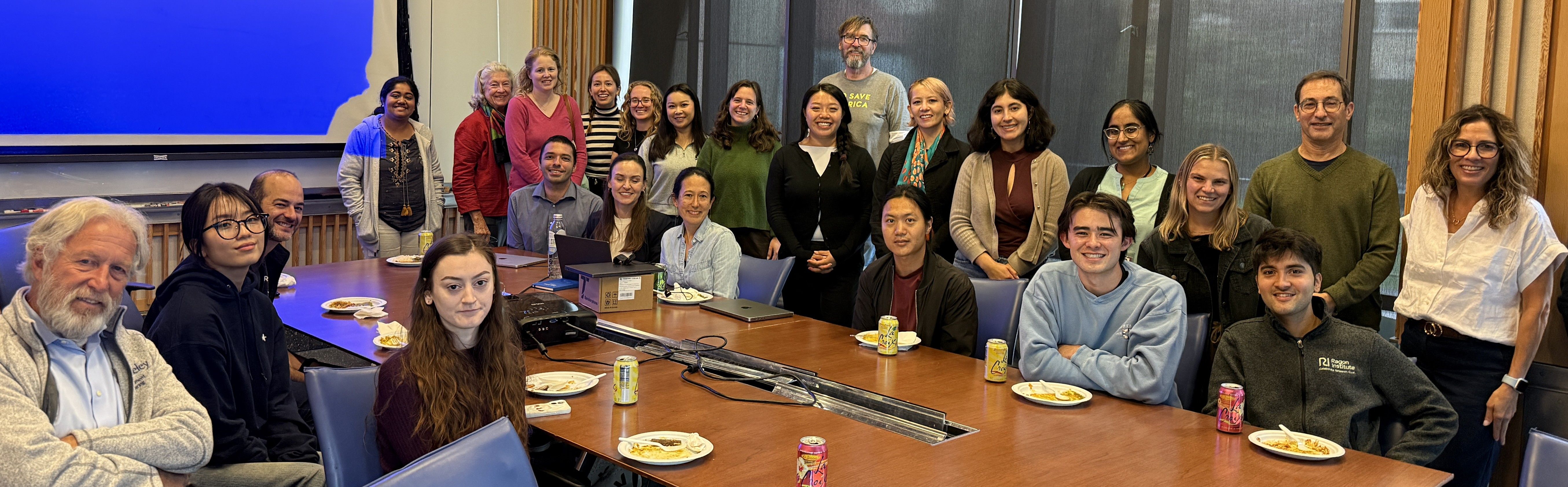
September CEND It! Speaker: Leo Martinez, PhD
From Trial to National Policy: Evaluating the Four-Month SHINE Regimen for Childhood Tuberculosis in Kenya
Dr. Leo Martinez shared his work on evaluating shorter treatment for childhood tuberculosis (TB) in Kenya during the September "CEND It! Emerging Ideas” monthly talk. Dr. Martinez is an assistant professor in the Division of Epidemiology at UC Berkeley School of Public Health. His work focuses on the epidemiology of tuberculosis and other infectious diseases. Much of his work centers on the early-life risk factors for TB, as well as the role of nutrition and growth in tuberculosis risk and chronic disease outcomes.
According to the World Health Organization, 10 million people fall ill with TB every year. Most of the people who fall ill with the illness live in under-resourced countries, such as South Africa, Bangladesh, China, India, Indonesia, Nigeria, Pakistan, and the Philippines. TB is also considered a preventable disease, so there is a great need for public health leaders to prioritize TB treatment, especially in the countries that are most impacted.
Dr. Martinez researches the approaches to study tuberculosis transmission and prevention among populations at elevated risk, including children and people with HIV. Check out his recently published paper, “Duration of effectiveness of tuberculosis preventive treatment across various tuberculosis burden settings: a systematic review and individual-participant meta-analysis.“
In the talk, he spoke on the importance of tackling the major global burden of childhood TB. According to the WHO, 1.2 million children develop TB and 174,000 children die from TB annually.
His research focused on the implementation of the four-month SHINE treatment regimen in children in Kenya. Following a randomized trial that found four months of treatment was as effective as six months of treatment in children with non-severe TB, the WHO included this shorter regimen in its clinical recommendations, and Kenya implemented the SHINE regimen nationally.
The main guiding question was: What happens when the shorter SHINE regimen is implemented nationally? To what extent did the implementation align with WHO recommendations? Which children received four versus six months of treatment? And how did receiving either four or six months of treatment impact TB outcomes?
His research found that only 2.8% of children who went through the 4-month treatment faced an unfavorable outcome compared to the 3.1% who faced an unfavorable outcome in their 6-month treatment, a non statistically-significant difference. Mortality rates and loss-to-follow-up, or non-completion of the treatment regimen, were also the same across treatment regimens. In other words, in Kenya, during the implementation of the new shorter regimen, children with non-severe TB responded as well, recovered as well, and completed their treatment as well in the four months of treatment as compared to six months.
Looking forward, unanswered questions include the effectiveness of the shorter treatment regimen in other contexts, the comparative costs and patient and provider acceptability, and the impact on tuberculosis recurrence, as well as how to improve the consistency of implementation of the new regimen, as the study found that it was implemented correctly in about ¾ of health facilities.
The Center of Emerging and Neglected Diseases holds its monthly research talk series on unique topics, though all talks relate to infectious diseases led by today’s innovative researchers. Our goal is to bridge new methods and research from a variety of perspectives and disciplines to our community.