
Bio
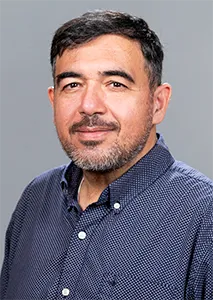
Prof. Mohammad Reza Kaazempur Mofrad is a Professor of Bioengineering and Mechanical Engineering at UC Berkeley, where he leads a multidisciplinary research program at the interface of biomechanics, mechanobiology, artificial intelligence, and computational biology. His laboratory investigates how physical forces shape biological structure and function across molecular, cellular, and multicellular scales, and develops computational tools and AI-driven approaches to advance human health.
Prof. Mofrad’s research integrates four major areas:
1. Cellular Mechanobiology
His group studies how cells sense, transmit, and respond to mechanical forces, with particular emphasis on focal adhesions, the cytoskeleton–nucleus linkage, nuclear pore complexes, and chromatin organization. This work provides fundamental insight into mechanotransduction, gene regulation, and the mechanical basis of diverse diseases, including cardiovascular and neurodegenerative disorders.
2. Bioinformatics and Deep Learning
The lab develops advanced computational and AI-driven methods for large-scale biological data analysis. Areas of focus include protein function prediction, structural and sequence modeling, and functional annotation. The group has pioneered influential approaches such as ProtVec, a deep-learning embedding framework for proteomics and metagenomics.
3. Bacterial Mechanotransduction and Microbiome Systems Biology
Prof. Mofrad’s team investigates how bacteria perceive and respond to mechanical cues, and how mechanical interactions shape microbial communities, biofilms, and host–microbe interfaces. This research has implications for antimicrobial resistance, infectious disease, and precision microbiome engineering.
4. Digital Medicine and AI-Enhanced Health Technologies
His lab creates computational and AI-based tools for digital diagnostics, drug discovery, and personalized medicine. By integrating machine learning with physics-based and multiscale biomechanical modeling, the group develops new frameworks for automated disease detection, therapeutic discovery, and patient-specific clinical decision support.